• Ready to join Post Terminus?

    Click to get started and submit your first character.

    Getting Started

Canonization Thread


Hmm. The location itself is interesting and most of the lore behind it is good. I can see two main problems, though.

First, where you're putting it is not exactly unexplored waters. The Tenebrae and Chlorae Oceans are probably better locations for mysterious/hidden things, but the Copiae Ocean is tame, in comparison, since it's where the velen empire has its cities. Putting it to the east of Excelsus, in the Chlorae Ocean, would probably be a bit better.

Second, I can't see the government sending criminals to something unknown. For one thing, if they don't know where it is, the criminal could just never look for the tower at all. Peace out, bro. The idea of it being a place of mysterious disappearances and legends could stick, but how true the legends are would remain to be seen.

See if you can put together another write-up to tweak these things.

/superlate

The idea was to put this on a small chain of islands so that, while its exact location is never the same at any given time the islands are visited, they remain in the same general area allowing for government ships to sail around with held criminals (whom they probably don't have to treat humanely and give things like food, water, latrines, etc) and when they do stumble on the tower take the criminals ashore (or as close as they'd like to get) and let the tower do the rest.

The only mysteries for this are 1) how does it move 2) why does it move 3) what's inside 4) why does it attract criminals?

I'll resubmit Adamas Cor and better flesh out the description to reflect these things unless this idea is no good.
 
ESQUILINIUM DISTRICT

This district is located in the southern part of Terminus, not too far from the Elata Spiritus Docks. One of the Three Jewels resides in this district.
Its inhabitants are butchers, fishmongers, smiths, gardeners, labourers, clerks and masons. It is a multifaceted and alive micro world, with streets crowded with people working, minding their own business or in search of some goods. In fact, there are many locations where different merchandises might be bought: the Macellum (the meat market), the Forum Piscatorium (the fish market), the Holitorium (the vegetable market) and the Emporium.
Stalls of all types of traders clog the streets: florists, perfumers, blacksmiths and so on, while in a corner of a slightly more secluded street (if you could say secluded) the tonsores (barbers) practice their craft. Wherever one goes, chaos reins, together with the most unexpected noises, especially the weirs of the excited voices of the buyers who bargain with the sellers.

Other Locations
  • The Stone Cold Workshop - Owner: Ludovicus Gaius Verre, smith extraordinaire
 
ESQUILINIUM DISTRICT

This district is located in the southern part of Terminus, not too far from the Elata Spiritus Docks. One of the Three Jewels resides in this district.
Its inhabitants are butchers, fishmongers, smiths, gardeners, labourers, clerks and masons. It is a multifaceted and alive micro world, with streets crowded with people working, minding their own business or in search of some goods. In fact, there are many locations where different merchandises might be bought: the Macellum (the meat market), the Forum Piscatorium (the fish market), the Holitorium (the vegetable market) and the Emporium.
Stalls of all types of traders clog the streets: florists, perfumers, blacksmiths and so on, while in a corner of a slightly more secluded street (if you could say secluded) the tonsores (barbers) practice their craft. Wherever one goes, chaos reins, together with the most unexpected noises, especially the weirs of the excited voices of the buyers who bargain with the sellers.

Other Locations
  • The Stone Cold Workshop - Owner: Ludovicus Gaius Verre, smith extraordinaire

In regard to location: The Elata Spiritus docks are actually several days' travel away unless traveling by a small airship. They're about as far away as the city of Avelyn (which was established as being about a week's travel away from Terminus). I realize that was also stated in the Three Jewels codex, which I missed, but I've corrected it.

Also mentioning the Three Jewels: the Ruby Jewel is the shopping center or market area. It's not just a shop in the area.

Since this is overlapping with the Ruby Jewel, we could either consider this a more detailed description of the area surrounding the Ruby Jewel, or it could be relocated to a new area. What would you prefer?
 
In regard to location: The Elata Spiritus docks are actually several days' travel away unless traveling by a small airship. They're about as far away as the city of Avelyn (which was established as being about a week's travel away from Terminus). I realize that was also stated in the Three Jewels codex, which I missed, but I've corrected it.

Also mentioning the Three Jewels: the Ruby Jewel is the shopping center or market area. It's not just a shop in the area.

Since this is overlapping with the Ruby Jewel, we could either consider this a more detailed description of the area surrounding the Ruby Jewel, or it could be relocated to a new area. What would you prefer?

Sorry, I probably missed some information here and there...

I pictured it as a rather large working-class district with a single distinctive feature, that is one of the Three Jewels. Therefore, I would probably go with option number one, thanks. I would also propose that the "Other Locations" field, might be updated with additional stalls / workshops / warehouses / stores, possibly with whoever plan to play the PC/NPC dwelling there...
 
Sorry, I probably missed some information here and there...

I pictured it as a rather large working-class district with a single distinctive feature, that is one of the Three Jewels. Therefore, I would probably go with option number one, thanks. I would also propose that the "Other Locations" field, might be updated with additional stalls / workshops / warehouses / stores, possibly with whoever plan to play the PC/NPC dwelling there...

Approved as the following:

ESQUILINIUM DISTRICT

This district is located in southeastern Terminus and holds the nearest landing for the Elatus Spirit Docks. It is also known as the Ruby Jewel, one of the Three Jewels of Terminus.

Its inhabitants are butchers, fishmongers, smiths, gardeners, laborers, clerks and masons. It is a multifaceted and lively micro world, its streets crowded with people working, shopkeepers hawking their wares, or customers in search of goods. In fact, there are many locations where different kinds of merchandise might be bought: the Macellum (the meat market), the Forum Piscatorium (the fish market), the Holitorium (the vegetable market) and the Emporium.

Stalls of all types of traders clog the streets: florists, perfumers, blacksmiths and so on, while in a corner of a slightly more secluded street (if you could say secluded) the tonsores (barbers) practice their craft. Wherever one goes, chaos reins, together with the most unexpected noises, especially the weirs of the excited voices of the buyers who bargain with the sellers.

Other Locations

  • The Stone Cold Workshop - Owner: Ludovicus Gaius Verre, smith extraordinaire
 
Adamas Cor, The Brilliant Heart -
East of the Walled City, Excelsa, in the Chlorae Ocean, lay a chain of islands of little attention. They carry no amazing creatures, nor do they trumpet any champions or proud achievements in the ways of magic or science. They are in a word: simple. Yet here, in these quiet islands, is the site of a major mystery to Araevis.

Sailors speak of a jagged tower made of glass that pierces the sky like a spear, and how any who wander in search of it never return. Many a swashbuckler, or honest skipper, have lost men to the sight of this tower. They claim that it glows with all the warmth of the sun, and promises of redemption beyond the word mortal kin know. Still, not all are incited by this construct and so the story spreads.

Through investigation officials of Excelsa have verified that the tower physically moves from island to island, remaining in the same chain for unknown reasons. They have also discovered the criteria for those who wander in - guilty souls. Or, more concretely, souls who harbor intense hidden desires of greed, murder, lust, and other sinful tastes. This has popularized the use of exile for criminals on these islands where the tower appears, though this is reserved for the most heinous of convicts and repeat offenders. Surprisingly, or perhaps humorously, this punishment is favored by the criminals who believe they getting off light. It has, similarly, made Adamas Cor a hot spot for the spiritual who wish to test their purity, as well as would-be thieves or treasure-hunters looking to make a name of themselves.

One man, however, a man long since thought mad and now dead, recounted his own escape from the horrors of Adamas Cor - a truly hellish prison for all who have sinned. A place that was more alive and had nightmarish beasts that the Vis should never have allowed to exist.

He told of the nightmares he fled from, and of the twisting paths the crystalline interior seemed to make with walls and ceiling like that of a polished mirror. He babbled about killing himself, and about killing others, all for the sake of redemption. But before he could so much as describe the monsters that dwelled within Adamas Cor, the madman was found dead.

So Adamas Cor gained a new name alongside it from these fanciful tales of a madman: The Diamond Prison. A place for sinners, criminals, and the foolhardy alike. A place of mystery to plunder, live out exile, or pilgrimage.
 
take dos
Also, I'm not entirely sure where Valmoor would be found, but I reckon it's on the same continent as Terminus, and accessible in a day if you know where to look from Terminus.

Valmoor (Vahlmore),
City of Blight

If prosperity is what drives, we shun all that comes before. Through serenity, one, and with severity we come. We are the bringers of fate, harbingers of our own demise. For that is our own true fate: to unite, prosper, and lose all that came before as we kindle in the blight.

So as we stand on the precipice of our crossroads, united amongst the living dead, we hail for all that is holy, and wail for all of our dread. Though beaconing a virtue its own, we shun it, not for our selfish rights, but our continued existence undone.

And as we sail into the blind abyss, doth we not dream upon the stars? For our men, our women and children alike?

Because if not for the age of man, what doth we fight for? - Balthasar the Mad, King Regent of Vahlmore.


Founded sometime around 217 P.T. by a royal scholar known as Balthasar, Valmoor - coined as Vahlmore then - was a town turned city of oddities. It had a bit of everything, from purebloods, to half bloods and while machinery was not looked upon fondly, they did not mind its presence. What made Valmoor different from other cities back then was its unhealthy obsession with everything unliving.

From the recently deceased to the morbidly ancient, Valmoor had soon turned itself into a hub for all things necromancy. For every three children born, one or two would end up as necromancers of great import in later life. The city prospered under the rule of Balthasar, with riches and great, usually over the top architecture caressing the city’s every corner.

Valmoor was ruled by a just, iron hand and its people were largely content with the way things were run. With necromancy at their every whims, the city of Valmoor was a proud beacon of an era long forgotten. It is for this particular reason that Vahlmore Necromancers are, to this day, a different cut altogether with often strange and bizarre rules to bind their every moves.

It wasn’t until 291 P.T. that things went sour for the city. After all, their king still had not perished. He was rapidly approaching his hundredth year (97), but after all this time he was still in charge, still very much alive. His public appearance had dwindled during the last twenty or so years, but his presence was still very much felt throughout.

When a select group of scholars from ‘outside’ went to see the king, and ask for an audience, on the 29th of Vesper 218 P.T., they found themselves facing a king gone mad. In his search for eternal life, in his crusades for power, Balthasar had dabbled in necromancy unheard of, and it was on this day that Vahlmore would be lost to the outside world for eras to come.

Cursing the outside for its continued existence, the king cast a veil over the city and closed it for good. As the mist closed itself around the city, he showed himself to the public once more and forbade any to leave the city. He then turned to his family and told them that if ever they needed to leave the city they could return only by uttering the following sentence:

“Vahlmore, Ire aste cente, miare loque.”

It was then that the Mad King, Balthasar the First perished, leaving behind only a city covered in Mist.

 
Last edited:
Seeing as my char's a professor and because I'm going to keep mentioning it...

Sapientia Coetus -

The most prestigious center for higher learning in Terminus (if not the world), the Sapientia Coetus sits deep within the administrative sector of the city. The building itself is a marvel of engineering, a multi-tiered tower extending far into the sky. At the base is a wide courtyard, the impeccably kept gardens and walkways an attraction in and of itself. The tower is pure white, constructed with a mix of marble and limestone. Gold trimmings spiral up and around the tower, branching outwards as if they were vines. Hexagonal windows are evenly spaced on the pillar, outlined with a similar golden trim.

Established seventy-three years after the Cataclysm, the school was originally designed to facilitate the exchange of information in a newly reforming world. As discovery began to flourish once more, so did the school. At that time, the burgeoning Arcanum often used the Sapientia Coetus for lectures and seminars. With the expansion of their power, the Sapientia Coetus was firmly placed under their authority.

While the number of universities has exponentially grown in the world, the Sapientia Coetus is renwowned as a center of discovery for all magics and sciences. The institution is separated into a numerous number of departments.

Levias:
Hosted in the basement levels, these researchers specialize in the fields of Daemonium, Pythonis, and Exanimum. Classification of newly discovered nature spirits and demons often occurs here.

Sophos:
The first twenty levels are reserved for the study of magic in all its forms. The long term goal of the department is the discovery of magics lost to the Cataclysm, as well as the development of new spells and rituals.

Proellia:
The next twelve floors host mechanists and engineers from around the world. Large portions of each floor consist of workshops littered with novel, and in many ways strange, machinations.

Iustus:
Alchemy and enchanting are hosted in the next five floors. A single additional floor was reserved to store a variety of rare and obscure ingredients. Laboratories are free for use and are completely stocked with any tools and devices a scientist may need.

Spectativus:
Twenty-five floors are reserved for the study of sciences and the arts. Departments range from mathematics to music, physics to archeology. Researchers of all races from around the world teach students who wish to learn, for a marginal fee of course. Lecture rooms are capable of seating hundreds, the Grand Hall capable of hosting above a thousand.

Praefixus:
The next sixteen floors are offices for researchers. They are sorted by department and rank, with each department consisting of a head Dean. The spaciousness of the office often indicates the prestige of the owner.

Primum:
The final three floors are officially known as the administrative offices. However, there are many rooms reserved only for the highest echelon of the Arcanum. Very little is known about the work done behind those doors. Guards are continuously stationed outside.
 
Location entry -

The Flemmingshire Farm Plantation

A plantation owned by Gundert Flemmingshire, a grain merchant of little-to-moderate renown. The plantation lands begin an hour's walk after you leave Terminus' southernmost wall, in the shadow of the mountains that separate Heimis' southern shore from the outskirts of Terminus.

The large-ish property is notable for being one of the few settlement acreages to the south of Terminus, as most of the area are forests that lead up to the mountain itself. Nearer to the base of the mountain is a water mill that works from a fresh water reservoir within the mountain itself, also owned by the Flemmingshire family.

Although the grain and mill operations, as well as several smaller diversifying business ventures are significant and proper profit drivers for the Flemmingshire Farm, the farm is also notable for dabbling in human, drug and weapon trafficking. The Four Guild Organizations have not seen fit, or more likely have not caught on yet, to further investigate any rumors of the farm's corruption, thus the illicit activities continue along with it's honest business ventures.

Recently, the main farm manor and smithy was victim to arson and is in the process of rebuilding.


Historical Entry -

The Seige of Excelsa

After the Cataclysm struck, the kingdom of Excelsus formed within a hundred years or so under the reign of the first monarch of Excelsus, King Antaeus Miurie Septen. King Septen I called together members of what would be the first pact of nobility, followed by a division of lands into the current system of Fiefdoms across the kingdom.

After staggered periods of prosperity and expansion of the lands claimed by Excelsus, King Septen the IV was drawn into a bitter campaign to secure his border on the Sea of Aquilonia. Throughout its short history, Excelsus had seen a consistent flow of monsters, demons, creatures and tribes of "wildmen", Laicar, along its northern borders. For over fifty years, war raged and burned Excelsus, testing its fortitude to its limits; until finally, the demons, monsters and wildmen drove their way into the heart of the kingdom. King Septen V, aging and seeking to pass on his crown, left the city in secret and called upon his powerful new allies, the Pelagium Empire, to his aid. Together, the localized armies of Excelsa and surplus forces from Pelagium drove out the attackers, though the king famously lost his life in the battle.

The Seige of Excelsa marked another period of growth for the Laicar kingdom, whereby King Septen VI and later, Queen Epthis I, would spend the next century erecting two famous walls, the Centennial Guard wall in the north; forty miles inland from the Sea of Aquilonia, named for its one-hundred guard towers (one every mile of the wall), and the transformation of Excelsa into the "Walled City" as it is currently known today.
 
Adamas Cor, The Brilliant Heart -
East of the Walled City, Excelsa, in the Chlorae Ocean, lay a chain of islands of little attention. They carry no amazing creatures, nor do they trumpet any champions or proud achievements in the ways of magic or science. They are in a word: simple. Yet here, in these quiet islands, is the site of a major mystery to Araevis.
Sailors speak of a jagged tower made of glass that pierces the sky like a spear, and how any who wander in search of it never return. Many a swashbuckler, or honest skipper, have lost men to the sight of this tower. They claim that it glows with all the warmth of the sun, and promises of redemption beyond the word mortal kin know. Still, not all are incited by this construct and so the story spreads.
Through investigation officials of Excelsa have verified that the tower physically moves from island to island, remaining in the same chain for unknown reasons. They have also discovered the criteria for those who wander in - guilty souls. Or, more concretely, souls who harbor intense hidden desires of greed, murder, lust, and other sinful tastes. This has popularized the use of exile for criminals on these islands where the tower appears, though this is reserved for the most heinous of convicts and repeat offenders. Surprisingly, or perhaps humorously, this punishment is favored by the criminals who believe they getting off light. It has, similarly, made Adamas Cor a hot spot for the spiritual who wish to test their purity, as well as would-be thieves or treasure-hunters looking to make a name of themselves.
One man, however, a man long since thought mad and now dead, recounted his own escape from the horrors of Adamas Cor - a truly hellish prison for all who have sinned. A place that was more alive and had nightmarish beasts that the Vis should never have allowed to exist.
He told of the nightmares he fled from, and of the twisting paths the crystalline interior seemed to make with walls and ceiling like that of a polished mirror. He babbled about killing himself, and about killing others, all for the sake of redemption. But before he could so much as describe the monsters that dwelled within Adamas Cor, the madman was found dead.
So Adamas Cor gained a new name alongside it from these fanciful tales of a madman: The Diamond Prison. A place for sinners, criminals, and the foolhardy alike. A place of mystery to plunder, live out exile, or pilgrimage.

Approved.

take dos
Also, I'm not entirely sure where Valmoor would be found, but I reckon it's on the same continent as Terminus, and accessible in a day if you know where to look from Terminus.

Valmoor (Vahlmore),
City of Blight

If prosperity is what drives, we shun all that comes before. Through serenity, one, and with severity we come. We are the bringers of fate, harbingers of our own demise. For that is our own true fate: to unite, prosper, and lose all that came before as we kindle in the blight.

So as we stand on the precipice of our crossroads, united amongst the living dead, we hail for all that is holy, and wail for all of our dread. Though beaconing a virtue its own, we shun it, not for our selfish rights, but our continued existence undone.

And as we sail into the blind abyss, doth we not dream upon the stars? For our men, our women and children alike?

Because if not for the age of man, what doth we fight for? - Balthasar the Mad, King Regent of Vahlmore.


Founded sometime around 217 P.T. by a royal scholar known as Balthasar, Valmoor - coined as Vahlmore then - was a town turned city of oddities. It had a bit of everything, from purebloods, to half bloods and while machinery was not looked upon fondly, they did not mind its presence. What made Valmoor different from other cities back then was its unhealthy obsession with everything unliving.

From the recently deceased to the morbidly ancient, Valmoor had soon turned itself into a hub for all things necromancy. For every three children born, one or two would end up as necromancers of great import in later life. The city prospered under the rule of Balthasar, with riches and great, usually over the top architecture caressing the city’s every corner.

Valmoor was ruled by a just, iron hand and its people were largely content with the way things were run. With necromancy at their every whims, the city of Valmoor was a proud beacon of an era long forgotten. It is for this particular reason that Vahlmore Necromancers are, to this day, a different cut altogether with often strange and bizarre rules to bind their every moves.

It wasn’t until 291 P.T. that things went sour for the city. After all, their king still had not perished. He was rapidly approaching his hundredth year (97), but after all this time he was still in charge, still very much alive. His public appearance had dwindled during the last twenty or so years, but his presence was still very much felt throughout.

When a select group of scholars from ‘outside’ went to see the king, and ask for an audience, on the 29th of Vesper 218 P.T., they found themselves facing a king gone mad. In his search for eternal life, in his crusades for power, Balthasar had dabbled in necromancy unheard of, and it was on this day that Vahlmore would be lost to the outside world for eras to come.

Cursing the outside for its continued existence, the king cast a veil over the city and closed it for good. As the mist closed itself around the city, he showed himself to the public once more and forbade any to leave the city. He then turned to his family and told them that if ever they needed to leave the city they could return only by uttering the following sentence:

“Vahlmore, Ire aste cente, miare loque.”

It was then that the Mad King, Balthasar the First perished, leaving behind only a city covered in Mist.

Looks good. Approved.

Seeing as my char's a professor and because I'm going to keep mentioning it...

Sapientia Coetus -

The most prestigious center for higher learning in Terminus (if not the world), the Sapientia Coetus sits deep within the administrative sector of the city. The building itself is a marvel of engineering, a multi-tiered tower extending far into the sky. At the base is a wide courtyard, the impeccably kept gardens and walkways an attraction in and of itself. The tower is pure white, constructed with a mix of marble and limestone. Gold trimmings spiral up and around the tower, branching outwards as if they were vines. Hexagonal windows are evenly spaced on the pillar, outlined with a similar golden trim.

Established seventy-three years after the Cataclysm, the school was originally designed to facilitate the exchange of information in a newly reforming world. As discovery began to flourish once more, so did the school. At that time, the burgeoning Arcanum often used the Sapientia Coetus for lectures and seminars. With the expansion of their power, the Sapientia Coetus was firmly placed under their authority.

While the number of universities has exponentially grown in the world, the Sapientia Coetus is renwowned as a center of discovery for all magics and sciences. The institution is separated into a numerous number of departments.

Levias:
Hosted in the basement levels, these researchers specialize in the fields of Daemonium, Pythonis, and Exanimum. Classification of newly discovered nature spirits and demons often occurs here.

Sophos:
The first twenty levels are reserved for the study of magic in all its forms. The long term goal of the department is the discovery of magics lost to the Cataclysm, as well as the development of new spells and rituals.

Proellia:
The next twelve floors host mechanists and engineers from around the world. Large portions of each floor consist of workshops littered with novel, and in many ways strange, machinations.

Iustus:
Alchemy and enchanting are hosted in the next five floors. A single additional floor was reserved to store a variety of rare and obscure ingredients. Laboratories are free for use and are completely stocked with any tools and devices a scientist may need.

Spectativus:
Twenty-five floors are reserved for the study of sciences and the arts. Departments range from mathematics to music, physics to archeology. Researchers of all races from around the world teach students who wish to learn, for a marginal fee of course. Lecture rooms are capable of seating hundreds, the Grand Hall capable of hosting above a thousand.

Praefixus:
The next sixteen floors are offices for researchers. They are sorted by department and rank, with each department consisting of a head Dean. The spaciousness of the office often indicates the prestige of the owner.

Primum:
The final three floors are officially known as the administrative offices. However, there are many rooms reserved only for the highest echelon of the Arcanum. Very little is known about the work done behind those doors. Guards are continuously stationed outside.

This is hardly the most outlandish thing, but I actually would argue against the idea of this one school for basically every intellectual pursuit. The best engineering school is not typically the same as the best science school or the same as the best law school.

I do like the idea of there being a center for knowledge, but not one that covers every avenue of study.

Location entry -

The Flemmingshire Farm Plantation

A plantation owned by Gundert Flemmingshire, a grain merchant of little-to-moderate renown. The plantation lands begin an hour's walk after you leave Terminus' southernmost wall, in the shadow of the mountains that separate Heimis' southern shore from the outskirts of Terminus.

The large-ish property is notable for being one of the few settlement acreages to the south of Terminus, as most of the area are forests that lead up to the mountain itself. Nearer to the base of the mountain is a water mill that works from a fresh water reservoir within the mountain itself, also owned by the Flemmingshire family.

Although the grain and mill operations, as well as several smaller diversifying business ventures are significant and proper profit drivers for the Flemmingshire Farm, the farm is also notable for dabbling in human, drug and weapon trafficking. The Four Guild Organizations have not seen fit, or more likely have not caught on yet, to further investigate any rumors of the farm's corruption, thus the illicit activities continue along with it's honest business ventures.

Recently, the main farm manor and smithy was victim to arson and is in the process of rebuilding.


Historical Entry -

The Seige of Excelsa

After the Cataclysm struck, the kingdom of Excelsus formed within a hundred years or so under the reign of the first monarch of Excelsus, King Antaeus Miurie Septen. King Septen I called together members of what would be the first pact of nobility, followed by a division of lands into the current system of Fiefdoms across the kingdom.

After staggered periods of prosperity and expansion of the lands claimed by Excelsus, King Septen the IV was drawn into a bitter campaign to secure his border on the Sea of Aquilonia. Throughout its short history, Excelsus had seen a consistent flow of monsters, demons, creatures and tribes of "wildmen", Laicar, along its northern borders. For over fifty years, war raged and burned Excelsus, testing its fortitude to its limits; until finally, the demons, monsters and wildmen drove their way into the heart of the kingdom. King Septen V, aging and seeking to pass on his crown, left the city in secret and called upon his powerful new allies, the Pelagium Empire, to his aid. Together, the localized armies of Excelsa and surplus forces from Pelagium drove out the attackers, though the king famously lost his life in the battle.

The Seige of Excelsa marked another period of growth for the Laicar kingdom, whereby King Septen VI and later, Queen Epthis I, would spend the next century erecting two famous walls, the Centennial Guard wall in the north; forty miles inland from the Sea of Aquilonia, named for its one-hundred guard towers (one every mile of the wall), and the transformation of Excelsa into the "Walled City" as it is currently known today.

Both approved.
 
Mmk, I agree with that. Essentially I removed the engineering and summoner stuff. I also restricted it to being more of the humanities and culture. The magic stuff mixes with the archaeology and literature as people travel the world trying to find relics and weird/magical things.

Sapientia Coetus -

The most prestigious center for higher learning in Terminus (if not the world), the Sapientia Coetus sits deep within the administrative sector of the city. The building itself is a marvel of engineering, a multi-tiered tower extending far into the sky. At the base is a wide courtyard, the impeccably kept gardens and walkways an attraction in and of itself. The tower is pure white, constructed with a mix of marble and limestone. Gold trimmings spiral up and around the tower, branching outwards as if they were vines. Hexagonal windows are evenly spaced on the pillar, outlined with a similar golden trim.

Established seventy-three years after the Cataclysm, the school was originally designed to facilitate the exchange of information in a newly reforming world. As discovery began to flourish once more, so did the school. At that time, the burgeoning Arcanum often used the Sapientia Coetus for lectures and seminars. With the expansion of their power, the Sapientia Coetus was firmly placed under their authority.

While the number of universities has exponentially grown in the world, the Sapientia Coetus is renwowned as a center of discovery for all magics and the recovery of knowledge lost in The Cataclysm. The institution is separated into a numerous number of departments.

Sophos:
The first twenty levels are reserved for the study of magic in all its forms. The long term goal of the department is the discovery of magics lost to the Cataclysm, as well as the development of new spells and rituals.

Iustus:
Alchemy and enchanting are hosted in the next ten floors. A single additional floor was reserved to store a variety of rare and obscure ingredients. Laboratories are free for use and are completely stocked with any tools and devices a scientist may need.

Spectativus:
Twenty-five floors are reserved for documenting the history and culture of the world. Subjects include, but are not limited to, Archeology, History, Art, as well as literature and the classics. Researchers of all races from around the world teach students who wish to learn, for a marginal fee of course. Lecture rooms are capable of seating hundreds, the Grand Hall capable of hosting above a thousand.

Praefixus:
The next sixteen floors are offices for researchers. They are sorted by department and rank, with each department consisting of a head Dean. The spaciousness of the office often indicates the prestige of the owner.

Primum:
The final three floors are officially known as the administrative offices. However, there are many rooms reserved only for the highest echelon of the Arcanum. Very little is known about the work done behind those doors. Guards are continuously stationed outside.
 
Mmk, I agree with that. Essentially I removed the engineering and summoner stuff. I also restricted it to being more of the humanities and culture. The magic stuff mixes with the archaeology and literature as people travel the world trying to find relics and weird/magical things.

Sapientia Coetus -

The most prestigious center for higher learning in Terminus (if not the world), the Sapientia Coetus sits deep within the administrative sector of the city. The building itself is a marvel of engineering, a multi-tiered tower extending far into the sky. At the base is a wide courtyard, the impeccably kept gardens and walkways an attraction in and of itself. The tower is pure white, constructed with a mix of marble and limestone. Gold trimmings spiral up and around the tower, branching outwards as if they were vines. Hexagonal windows are evenly spaced on the pillar, outlined with a similar golden trim.

Established seventy-three years after the Cataclysm, the school was originally designed to facilitate the exchange of information in a newly reforming world. As discovery began to flourish once more, so did the school. At that time, the burgeoning Arcanum often used the Sapientia Coetus for lectures and seminars. With the expansion of their power, the Sapientia Coetus was firmly placed under their authority.

While the number of universities has exponentially grown in the world, the Sapientia Coetus is renwowned as a center of discovery for all magics and the recovery of knowledge lost in The Cataclysm. The institution is separated into a numerous number of departments.

Sophos:
The first twenty levels are reserved for the study of magic in all its forms. The long term goal of the department is the discovery of magics lost to the Cataclysm, as well as the development of new spells and rituals.

Iustus:
Alchemy and enchanting are hosted in the next ten floors. A single additional floor was reserved to store a variety of rare and obscure ingredients. Laboratories are free for use and are completely stocked with any tools and devices a scientist may need.

Spectativus:
Twenty-five floors are reserved for documenting the history and culture of the world. Subjects include, but are not limited to, Archeology, History, Art, as well as literature and the classics. Researchers of all races from around the world teach students who wish to learn, for a marginal fee of course. Lecture rooms are capable of seating hundreds, the Grand Hall capable of hosting above a thousand.

Praefixus:
The next sixteen floors are offices for researchers. They are sorted by department and rank, with each department consisting of a head Dean. The spaciousness of the office often indicates the prestige of the owner.

Primum:
The final three floors are officially known as the administrative offices. However, there are many rooms reserved only for the highest echelon of the Arcanum. Very little is known about the work done behind those doors. Guards are continuously stationed outside.

Looks good to me. Approved.
 
This is hardly the most outlandish thing, but I actually would argue against the idea of this one school for basically every intellectual pursuit. The best engineering school is not typically the same as the best science school or the same as the best law school.

I've got an idea for engineering stuff that I can post in a day or so.
 
Map/Location Entry(s) -

Volcanos: Acigol-Adwa, Aridus' "Southern Cluster", Mount Othrys

Named for the Enlil tribal cartographer who helped discover, and later map, much of the western Denuntiares mountain range. The Acigol-Adwa volcano sits near the western coastal edge midway between Excelsa and Prenditus. The business and intent to explore this region is sparse though, as it is rife with predators and dangers that prevent all but the bravest or most prepared land travelers. The dangers presented though are not without relief, and multiple airship routes and a handful of main roads through the mountain ranges have been established through the last century.

The volcano's name is just one of a lifetime of high-profile contributions inter-kingdom commemorations by Magister Eximium, and was suggested by him as a gesture toward continuing peace between the kingdoms of Prendere and Excelsus almost seventy years ago.

Acigol-Adwa is one of the only remaining active volcanoes on the continent of Secare, though it hasn't erupted in nearly three hundred years. It is, however, part of a larger system of volcanic activity on Secare; remnants of a super-volcano that is speculated to have had peak activity during and immediately following the Cataclysm. As such, many scientists attempt yearly to monitor and record volcanic activity in order to better understand the hotbed of volcanic activity elsewhere in the world - such as Aridus' southern cluster, populated by Mount Hursag-Sesro to the west, Keun-Lun Shan to the north and Vulcan to the south, or the Boreas super-volcano, Mount Othrys, which lies west of Aboreal City, Astrum.

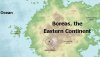
Othrys.jpg

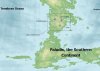
Southern Cluster.jpg

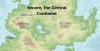
Acigol-Adwa Volcano Araevis Map.jpg
 
Last edited:
Changes in bold. Let me know if you would like it modded more :)

Named for the Enlil tribal cartographer who helped discover, and later map, much of the western Denuntiares mountain range. The Acigol-Adwa volcano sits near the western coastal edge midway between Excelsa and Prenditus. The business and intent to explore this region is sparse though, as it is rife with predators and dangers that prevent all but the bravest or most prepared land travelers. The dangers presented though are not without relief, and multiple airship routes and a handful of main roads through the mountain ranges have been established through the last century.

The volcano's name is just one of a lifetime of high-profile contributions inter-kingdom commemorations by Magister Eximium, and was suggested by him as a gesture toward continuing peace between the kingdoms of Prendere and Excelsus almost seventy years ago.

Acigol-Adwa is one of the only remaining active volcanoes on the continent of Secare, though it hasn't erupted in nearly three hundred years. It is, however, part of a larger system of volcanic activity on Secare; remnants of a super-volcano that is speculated to have had peak activity during and immediately following the Cataclysm. As such, many scientists attempt yearly to monitor and record volcanic activity in order to better understand the hotbed of volcanic activity elsewhere in the world - such as Aridus' southern cluster, populated by Mount Hursag-Sesro to the west, Keun-Lun Shan to the north and Vulcan to the south, or the Boreas super-volcano, Mount Othrys, which lies west of Aboreal City, Astrum.
 
SO. Had an idea for this random gulf I noticed sitting around in the eastern half of the kingdom of Prendere just north of Prodest. And I figured it'd be a good idea to make it a high traffic port area city-state thing. Like an airship/sea vessel/trade center of prendere, maybe the world.

So I whipped up a quick description of my thought:
Oppidum Bulla
The city of bubbles

In the eastern part of Prendere, a few kilometers south of prodest lies the largest trade center in the world. Named bubble town for its strange architecture -that resembles of course soap bubbles- it is a merchant town that operates in three dimensions for all of its customers of the three biological races. Sprawling bazaars and markets nearly cover the entirety of the city-state, -under water and above- so the residents live in large skyscraping buildings that reach almost as high as the olden forests of the enlil, and huge underwater districts made for velen and air-breathers alike, consisting of huge sealed pockets that house each section.

This impossibly large palace of a trade center enjoys a prospering economy and community spirit, thanks to a comfortable lifestyle. If Terminus is the center of the idea world, then Oppidum Bulla is the center of the world's commerce and travel. Huge fleets of sea-vessels and airships patrol the skies on a regular basis, taking and bringing goods to and from the city. The residents themselves are generally friendly fast-talkers, and have been known to take in a rich foreigner by morning, and have him leave with nothing but the clothes on his back. A known saying among the locals is, "In Oppidum Bulla, you can find anything and everything you ever thought you'd need in life, plus more things to need!"

Oppidum Bulla.jpg
 
Got a question here, maybe a request, even. I was curious as to the typical naming conventions for each race. I did take notice of a snippet regarding naming conventions on the Demvir's history page in the codex, but even that is a bit buried.

What I'm asking about, or perhaps requesting, is that each race get a small tidbit maybe at the bottom of the page that either mentions that particular race's naming conventions, or even gives examples.

I'll even dare to use Dungeons & Dragons and other such creations as an example — even one or two examples for each race can help prospective newbies give names to their characters that won't break canon in half.
 
Got a question here, maybe a request, even. I was curious as to the typical naming conventions for each race. I did take notice of a snippet regarding naming conventions on the Demvir's history page in the codex, but even that is a bit buried.

What I'm asking about, or perhaps requesting, is that each race get a small tidbit maybe at the bottom of the page that either mentions that particular race's naming conventions, or even gives examples.

I'll even dare to use Dungeons & Dragons and other such creations as an example — even one or two examples for each race can help prospective newbies give names to their characters that won't break canon in half.

Underway right now. I'll bring the existing information to the forefront so it's less buried, and give examples for reference. Again, naming conventions are guidelines. They don't have to be adhered to entirely, but at the same time we have to draw a line in the sand at some point. If someone can find a perfectly good reason for a character to be called "Captain Lavender; Champion of the Stars" and have it make canonical sense, fine, but in general, such extravagant things should be relegated to nicknames or something. This also has to do with people naming characters after already existing characters in other properties, which further muddles things. As Raph pointed out, we wouldn't have accepted a "Naruto Uzumaki" in HD.

One way or the other, the information will be put out there for everyone, front and center, so we don't have to worry about this again.
 
Vanus’ Junction
Location: North Central Paludis (I5)

It was not long after the founding of the Pelagium Empire that the velen set their sights on the unclaimed riches of Paludis. The emperor at the time appointed one Vanus Eurites as local envoy to establish a foothold on the continent. Vanus’ Junction, its original name long since lost, started as a relatively small velen port city used to help traders whose cargo to and from Prendere prevented travel across the deeper parts of the Copraie Ocean.

In time it was established as what was going to be a great extension of the velen empire onto the untamed shores of Paludis. While a number of laicar laborers were hired by the velen the jungle resisted every attempt to tame it.

The outpost has now grown into the largest on the northern half of Paludis sporting a population of around 200k. While the largest recorded population are velen, most of them are traders and thus by and large laicar make up the majority of the permanent residents.

Sporting a large harbor, most of the buildings of the town are easy to assemble works of wood. Original the velen attempted to build Vanus’ Junction as a traditional city though sudden rainstorms and other natural phenomena destroyed most buildings. Finally fed up builders settled on cheap, easily replaced wood dwellings.

The outpost now provides a mixture of exotic spices and tropical woods throughout Araevis mostly gathered by the descendants of the original laicar laborers who were brought to the outpost. Adventurers and scholars also make up a rather small portion of the population who seek to tap the supposed riches of the interior. However these actions are largely squashed thanks the the continent’s unique mix of terrain, climate, and wildlife.
 

Current Date in Araevis

Back
Top