take dos
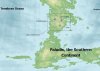
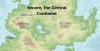
Also, I'm not entirely sure where Valmoor would be found, but I reckon it's on the same continent as Terminus, and accessible in a day if you know where to look from Terminus.
Valmoor (Vahlmore),
City of Blight
If prosperity is what drives, we shun all that comes before. Through serenity, one, and with severity we come. We are the bringers of fate, harbingers of our own demise. For that is our own true fate: to unite, prosper, and lose all that came before as we kindle in the blight.
So as we stand on the precipice of our crossroads, united amongst the living dead, we hail for all that is holy, and wail for all of our dread. Though beaconing a virtue its own, we shun it, not for our selfish rights, but our continued existence undone.
And as we sail into the blind abyss, doth we not dream upon the stars? For our men, our women and children alike?
Because if not for the age of man, what doth we fight for? - Balthasar the Mad, King Regent of Vahlmore.
Founded sometime around 217 P.T. by a royal scholar known as Balthasar, Valmoor - coined as Vahlmore then - was a town turned city of oddities. It had a bit of everything, from purebloods, to half bloods and while machinery was not looked upon fondly, they did not mind its presence. What made Valmoor different from other cities back then was its unhealthy obsession with everything unliving.
From the recently deceased to the morbidly ancient, Valmoor had soon turned itself into a hub for all things necromancy. For every three children born, one or two would end up as necromancers of great import in later life. The city prospered under the rule of Balthasar, with riches and great, usually over the top architecture caressing the city’s every corner.
Valmoor was ruled by a just, iron hand and its people were largely content with the way things were run. With necromancy at their every whims, the city of Valmoor was a proud beacon of an era long forgotten. It is for this particular reason that Vahlmore Necromancers are, to this day, a different cut altogether with often strange and bizarre rules to bind their every moves.
It wasn’t until 291 P.T. that things went sour for the city. After all, their king still had not perished. He was rapidly approaching his hundredth year (97), but after all this time he was still in charge, still very much alive. His public appearance had dwindled during the last twenty or so years, but his presence was still very much felt throughout.
When a select group of scholars from ‘outside’ went to see the king, and ask for an audience, on the 29th of Vesper 218 P.T., they found themselves facing a king gone mad. In his search for eternal life, in his crusades for power, Balthasar had dabbled in necromancy unheard of, and it was on this day that Vahlmore would be lost to the outside world for eras to come.
Cursing the outside for its continued existence, the king cast a veil over the city and closed it for good. As the mist closed itself around the city, he showed himself to the public once more and forbade any to leave the city. He then turned to his family and told them that if ever they needed to leave the city they could return only by uttering the following sentence:
“Vahlmore, Ire aste cente, miare loque.”
It was then that the Mad King, Balthasar the First perished, leaving behind only a city covered in Mist.